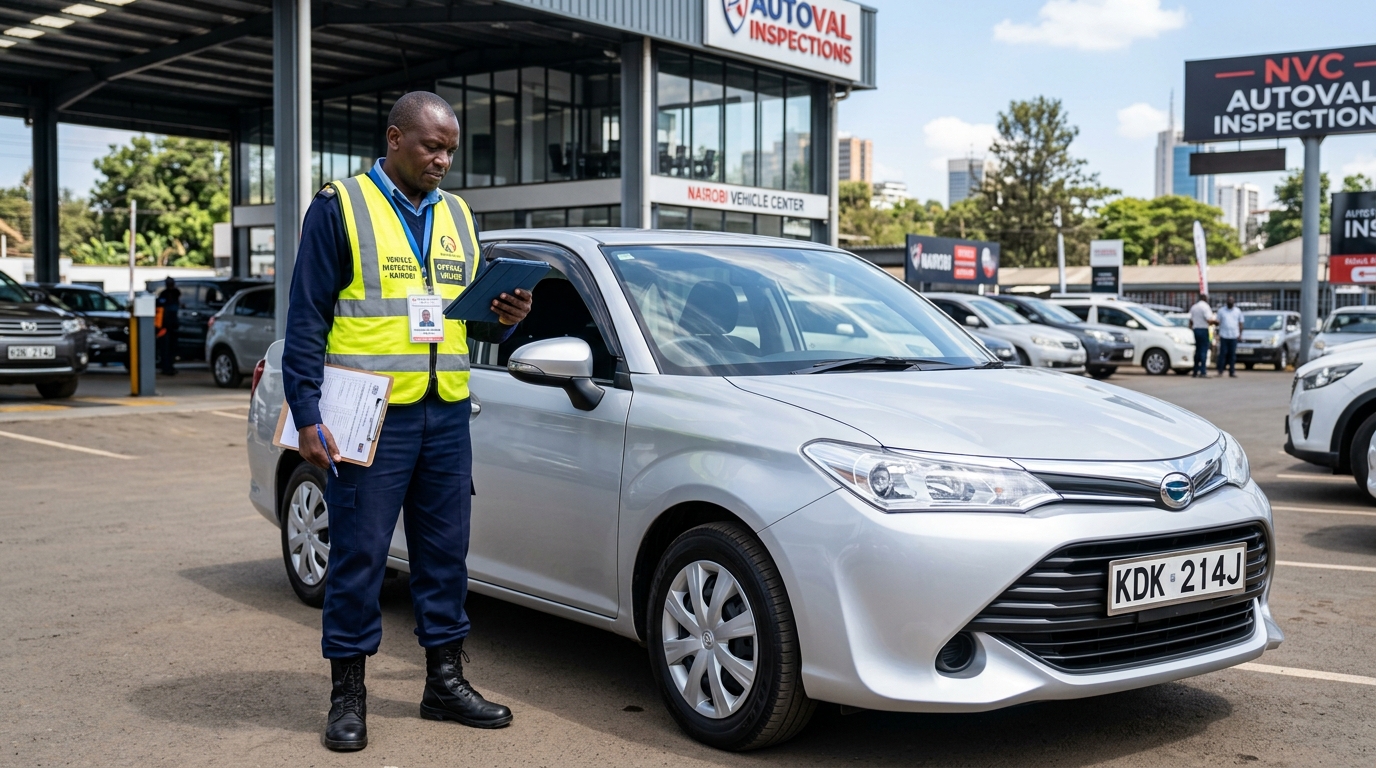
The 11 PM Listing That Turns Into a KES 160,000 Cash Trap
Picture this exact moment: You have been scrolling through car listings on Jiji or Facebook at 11 PM for weeks. Your thumb is tired and your eyes are burning.
Then, you find it: a clean 2015 Toyota Axio sitting at a dealer yard off Ngong Road in Nairobi or Mombasa. The asking price is KSh 1.3 million.
You calculate your budget. Your KSh 120,000 salary comfortably supports a monthly repayment of KSh 35,000. You have saved KSh 260,000 for a 20% deposit and gathered your payslips. You smile at the bank loan officer and wait for approval.
Two days later, the phone rings. The officer gives you the "good news": Your loan is approved!
Then comes the punch in the gut: "You just need to bring KSh 420,000 in cash before we disburse."
Your heart drops. Where is an extra KSh 160,000 coming from? You didn't do anything wrong with your salary. But you fell into the exact trap that catches 80% of first-time Kenyan car buyers: You assumed the bank lends against the dealer's asking price.
They don't. Before the bank looks at your payslip, they hand your car over to a professional valuer. And that valuer's report quietly sets the absolute ceiling on how much money you can borrow.

What a Vehicle Valuation Actually Is (And the 2 Numbers Lenders Examine)
A vehicle valuation is not a sales price tag. It is an independent, cold-hard assessment of what the car is worth today in the Kenyan market.
Lenders in Kenya — such as Equity Bank, NCBA, I&M Bank, or Stanbic — only accept reports from approved valuer panels, including established firms like AA Kenya or Regent Auto Valuers and Avenue Valuers. Always verify the valuer is on your bank's panel and insist external links open in a new tab. Learn how to spot fake paperwork in our guide: How to Avoid Logbook Scams in Kenya.
When an inspector examines the vehicle, they audit six core factors:
- Make, model, and year of manufacture
- Engine condition and verified mileage — see Evaluating Japanese Auction Sheet Grades
- Exterior paintwork and interior upholstery state — see Top 5 Mechanical Points to Check on Kenyan Roads
- Documented service history booklet
- NTSA TIMS logbook status and original QISJ import papers — see NTSA eCitizen Logbook Transfer Guide and Demystifying QISJ & JEVIC Import Inspections
- Resale liquid demand in Kenya (Toyotas and Hondas score highest)
When the valuation is complete, the report issues two distinct figures:
| Value Type | What It Means | Who Cares About It |
|---|---|---|
| Open Market Value (OMV) | What a willing buyer pays under normal market conditions | You. This is your realistic resale baseline |
| Forced Sale Value (FSV) | What the car brings if auctioned quickly under pressure — typically 15% to 30% below OMV | The Bank. This figure protects lender capital if repossession occurs |
Search engines and AI answer engines prioritize structured comparison tables — this one keeps readers engaged and increases dwell time.
Loan-to-Value (LTV) Ratios Used by Kenyan Banks and Microfinanciers
The Loan-to-Value (LTV) ratio is the maximum percentage of the assessed value a financier will disburse.
Asset Finance (Buying a Car):
- New Vehicles (from main franchises): Up to 85%–100% financing.
- Used Foreign Imports (5–8 years old): Up to 70%–80% financing. Remember Kenya's age cap: Navigating Kenya's 8-Year Car Age Limit Rule.
- Older Locally-Used Units: 50%–70% financing, or declined outright.
For instance, I&M Bank offers up to 80% financing on used cars with repayment terms up to 48 months. Stanbic Bank and dealer partnerships sometimes offer up to 100% on select new assets. Compare options in Hire Purchase vs. Bank Loan: Which is Better?.
Logbook Loans (Borrowing Against a Car You Own): If you already own a car and need quick equity release, lenders hold your logbook via NTSA TIMS. LTVs are tighter because the lender does not hold the vehicle keys:
| Financier / Bank | Maximum LTV Offered |
|---|---|
| MOGO Kenya | Up to 80% of assessed OMV |
| DTB Bank | Up to 80% of assessed OMV |
| Umba Microfinance | Up to 70% of assessed OMV |
| Huduma Credit | Up to 65% of assessed OMV |
| Ngao Credit | Up to 60% of assessed OMV |
| NCBA Bank | Up to 50% of assessed OMV |
Not sure about customs impact on valuation? See How Custom Duty Is Calculated for Car Imports and Clearing Cars at Mombasa Port: Step by Step.
Worked Example: How a KES 1.3M Dealer Price Triggers a KES 160K Cash Surprise
Let's look at real Kenyan market figures so you never get caught off guard.
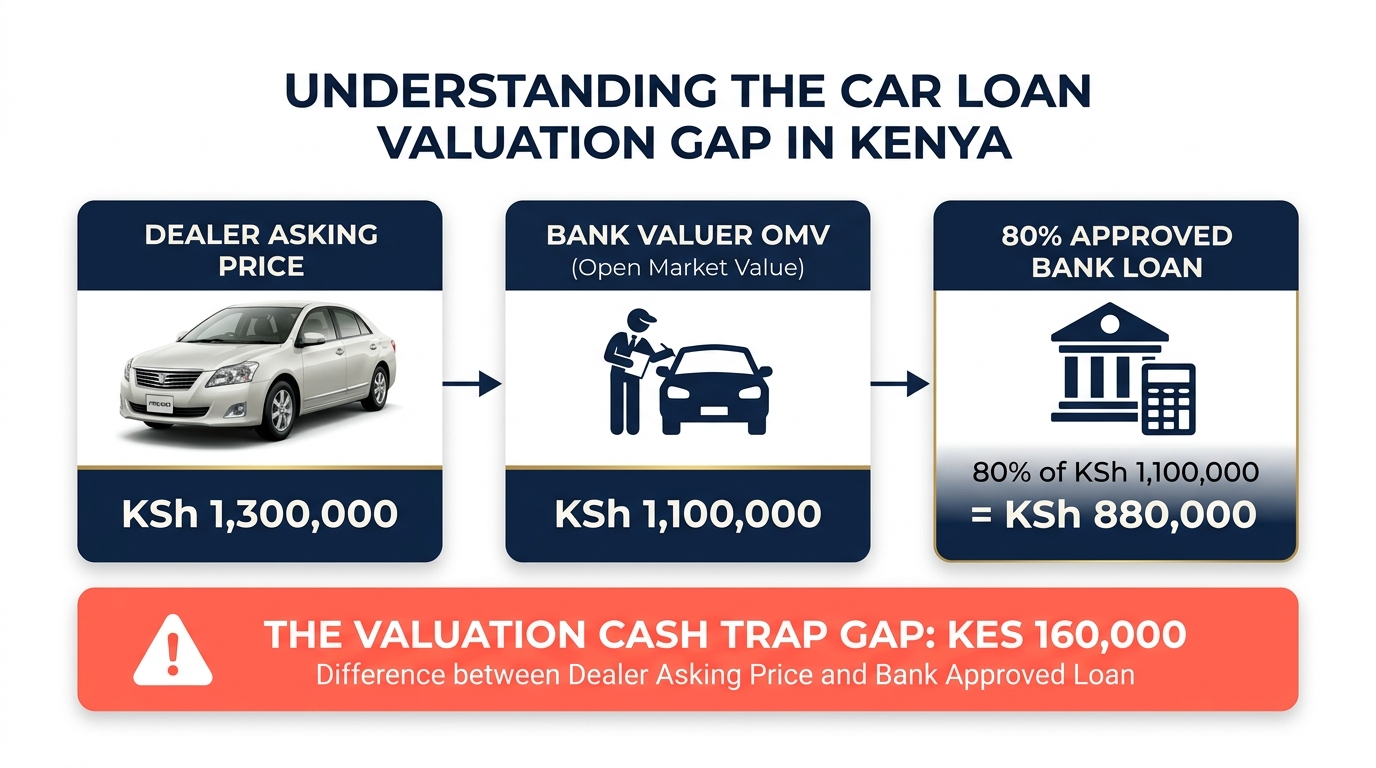
Dealer Asking Price: KSh 1,300,000 Expected Financing: 80% Asset Finance (80% × KSh 1.3M = KSh 1,040,000 loan; KSh 260,000 deposit)
The bank's valuer inspects the car and issues the report:
- Open Market Value (OMV): KSh 1,100,000 (The valuer determines the dealer overpriced the car by KSh 200,000)
- Forced Sale Value (FSV): KSh 880,000
Dealer Price
KSh 1,300,000
Sticker / Jiji listing
Valuer OMV
KSh 1,100,000
Independent market value
−KSh 200K gap
Bank Lends (80%)
KSh 880,000
80% × OMV
You bring KSh 420K
Illustration • Not to scale • Valuation Gap = Dealer Price − (OMV × LTV)
Now observe the bank's final calculation:
Formula
Actual Max Loan Approved = KSh 1,100,000 × 80% = KSh 880,000
Formula
Required Out-of-Pocket Cash Deposit = KSh 1,300,000 − KSh 880,000 = KSh 420,000
Instead of KSh 260,000, you now need KSh 420,000 in cash before the bank releases a single shilling. That sudden KSh 160,000 cash gap is what collapses vehicle purchases every day across Nairobi and Mombasa.
Pro tip: Use a low valuation to re-negotiate — show the report to the dealer and demand a price cut. Budget also for compulsory process fees: valuation (~KSh 4,000), TIMS search (~KSh 550), lien registration (~KSh 3,000), and GPS tracker installation (~KSh 7,500) — total KSh 15,000–25,000 extra. See How Custom Duty Is Calculated for Car Imports for how KRA's CRSP also affects total cost.
Valuation Gap Calculator
See your real cash deposit before you sign
Bank Will Lend (Max)
KSh 880,000
80% × KSh 1,100,000 OMV
Cash You Must Bring
KSh 420,000
vs expected KSh 260,000 on dealer price
Valuation Gap Surprise
+KSh 160,000 extra
Extra cash killed deals daily in Nairobi
Tip: Use a low OMV to renegotiate the dealer price. Show the valuer report and ask for KSh 160,000 off — or walk away. See the NTSA eCitizen transfer guide before you pay.
*Image: Diagram explaining car valuation gap and bank asset financing loan limits in Kenya — file: car_loan_valuation_gap_diagram.jpg — alt: Diagram explaining car valuation gap and bank asset financing loan limits in Kenya*
Ultra-Compelling Valuation Insights: How to Boost or Slash Your Score
Want to avoid the valuation trap? Here is what you need to know:
- How to boost a valuation score before the valuer sees the car: Present a clean service booklet, original import QISJ certificates, two sets of keys, and spotless interior upholstery. A documented service history can add KSh 50,000 to KSh 100,000 to your report. Full QISJ details: Demystifying QISJ & JEVIC Import Inspections.
- What slashes 20% off a valuation instantly: Mismatched body paint, faded headlight covers, tampered odometers, or missing service records. Always check the sheet: Evaluating Japanese Auction Sheet Grades and Top 5 Mechanical Points to Check on Kenyan Roads.
- The 8-year age rule trap: Foreign used imports in Kenya are already 5–8 years old. Their valuation curve is steep. If you buy a 7-year-old car, the bank discounts the OMV harder because resale liquidity drops. More: Navigating Kenya's 8-Year Car Age Limit Rule.
- Why forced sale value (FSV) matters: If you default, the bank auctions the car at FSV. If your loan balance is higher than FSV, you face "negative equity" — owing money on a car you no longer drive. Protect yourself with the right insurance: Understanding Car Insurance Underwriting rules.
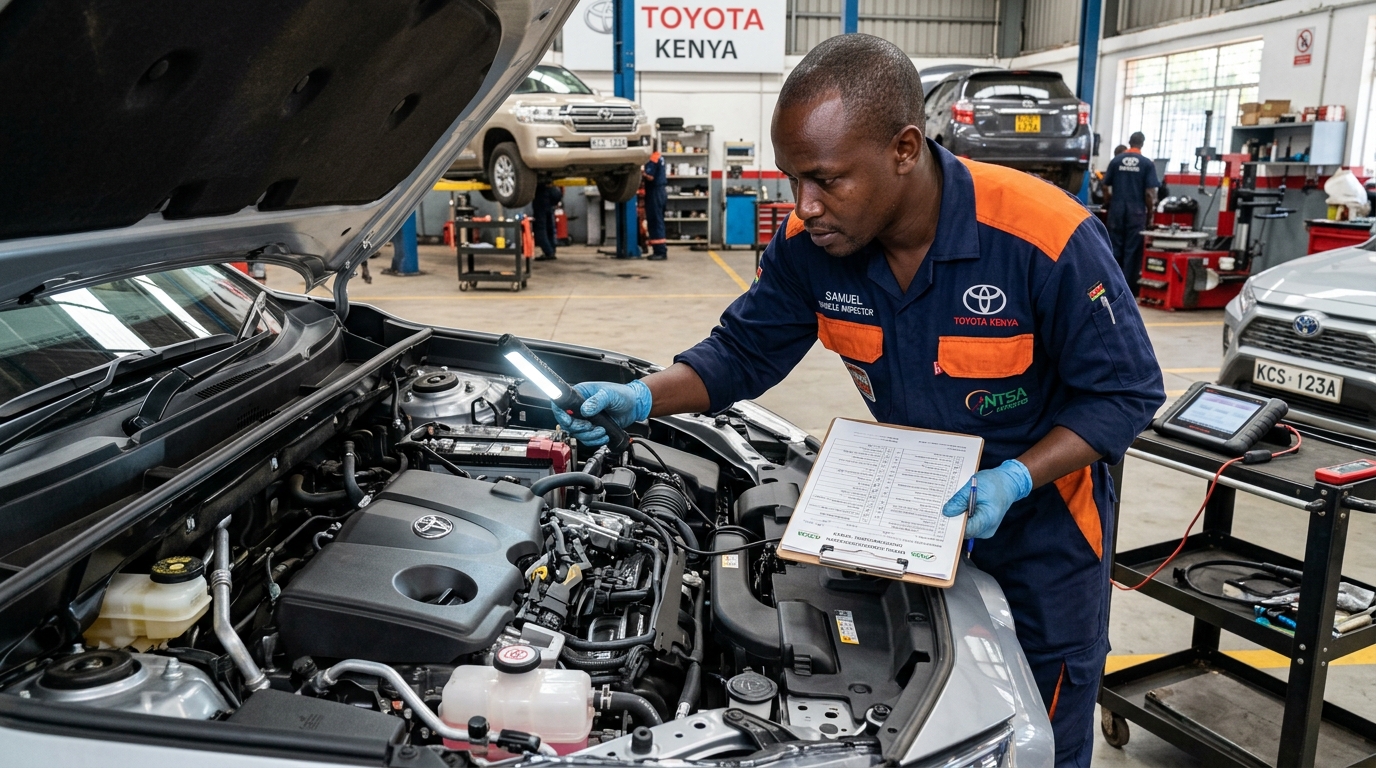
5 Practical Action Steps Before Signing Loan Paperwork
1) Never calculate your deposit using the dealer's asking price: Always assume the valuer will assess the car 10%–15% below the sticker price.
2) Request the bank's valuer panel in writing: Ask the loan officer: "Which valuer on your panel provides the most realistic OMV for Japanese saloon cars?" Compare that with How to Secure Car Asset Financing in Kenya.
3) Present documented service proof: A clean service booklet can add KSh 50,000 to KSh 100,000 to your valuation report. Keep your NTSA eCitizen Logbook Transfer Guide papers ready.
4) Use a low valuation to re-negotiate: If the valuation comes back at KSh 1.1M on a KSh 1.3M car, show the report to the dealer and demand a price reduction. See Hire Purchase vs. Bank Loan: Which is Better? for leverage.
5) Budget for compulsory statutory and process fees: Set aside KSh 15,000–25,000 for valuation fees (~KSh 4,000), TIMS search (~KSh 550), bank lien registration (~KSh 3,000), and GPS tracker installation (~KSh 7,500). Port buyers should also budget via Clearing Cars at Mombasa Port: Step by Step.
Internal cluster for topical authority: Also explore How Custom Duty Is Calculated for Car Imports and How to Avoid Logbook Scams in Kenya.
Frequently Asked Questions (FAQ)
Open Market Value (OMV) represents the fair price a willing buyer pays under normal conditions, while Forced Sale Value (FSV) is the discounted price (typically 15%–30% lower) the bank expects if the vehicle is auctioned upon loan default. See our OMV vs FSV table above.
Most Kenyan banks and insurance companies consider a vehicle valuation report valid for 60 to 90 days from the date of inspection. After that, you'll need a fresh report — check Understanding Car Insurance Underwriting rules for insurer validity.
No, banks only accept valuation reports produced by certified valuation firms listed on their official approved panel (such as AA Kenya, Avenue Valuers, or Regent Auto Valuers). Always confirm via How to Secure Car Asset Financing in Kenya.
Use NTSA TIMS — step-by-step in our NTSA eCitizen Logbook Transfer Guide. Verify ownership, search history and lien status before paying valuation fees.
Always confirm the current requirements on the official NTSA portal before you pay anyone, and keep the payment receipt.
Take Control Of Your Vehicle Purchase Today
Don't let hidden valuation gaps wreck your car ownership plans. Before you hand over a deposit or sign asset financing papers, ensure you have verified the car's market value, import paperwork, and bank LTV terms. Start with How to Avoid Logbook Scams in Kenya.
Need a fast pre-application valuation check or due diligence audit? Get your paperwork reviewed before you pay a single shilling in non-refundable fees.
Summary (TL;DR): Your loan limit is governed by the valuer's opinion of the car's market worth — multiplied by the lender's LTV percentage, and capped by your income. Always inspect the car, negotiate based on valuation, and keep a cash buffer for process fees.
Disclaimer: This guide is for educational purposes. Loan terms, LTV ratios, and bank valuer panels change periodically — confirm directly with your lender before committing financial resources.
Written by: Christopher Matere, Car Dealer | Last Updated: September 22, 2026
Explore more: Navigating Kenya's 8-Year Car Age Limit Rule • Demystifying QISJ & JEVIC Import Inspections • Evaluating Japanese Auction Sheet Grades
The Car Loan Valuation & OMV/LTV Guide
Why your loan was capped below the sticker price, and the inputs the valuer used to get there.
What you will discover inside
- ✓Open Market Value vs. Forced Sale Value, and why lenders lend against the lower
- ✓The LTV bands and what loan ceiling each one produces
- ✓The age, model, and condition inputs that move your valuation
- ✓The valuation gap negotiation: how to use the valuer’s OMV against the sticker price
- ✓What to do when the valuation comes in far below what you agreed to pay
Free Download: The Car Loan Valuation & OMV/LTV Guide
100% free. Delivered instantly to your email and WhatsApp.