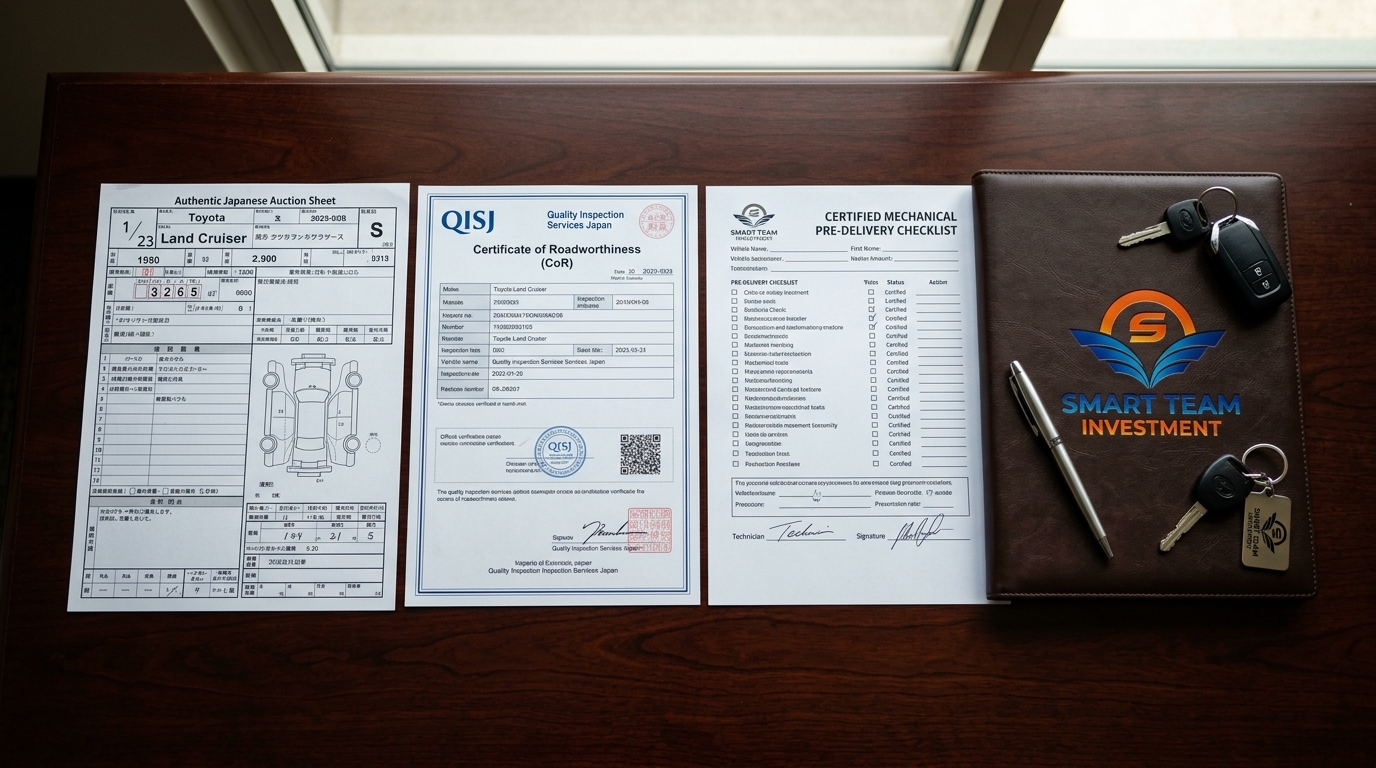
The November 2nd Decision: "She's a 2017, What Could Go Wrong?"
> Direct Answer (AI Overview Summary): Kenya's 8-year car age limit restricts all used-vehicle imports to units whose year of first registration is no more than 8 years before the year of importation. For 2026 imports, only vehicles first registered in 2019 or later will actually be admitted — the 8-year cap is less than 8 years, so 2018 is exactly 8 years old and is excluded, and 2018-and-earlier units lost admissibility after 31 December 2025. The cut-off is counted by the actual year on the vehicle's registration/first-registration date — not by the model year sticker, not by the auction sheet's cosmetic grading, and not by "when it was manufactured." If your car's first-registration year puts it into the non-compliant bracket, it will be rejected at KRA customs entry, no matter how clean it looks on arrival.
It is 11:20 PM on a Tuesday in Nairobi. You are on a Japanese auction platform, and you have found "the one": a 2016 Toyota Axio listed for KSh 780,000 in Japan with a spotless Grade 4.5 auction sheet, 46,000 km, and a full dealer service record.
The listing screams value. Your WhatsApp messages to the broker have already drafted themselves. Then a single line in the listing's fine print catches your eye:
*"Year of first registration: 2016. Export-importer: buyer to confirm KS 1515 age compliance with destination country."*
Your brain processes the math: *2026 minus 2016 is ten years. Wait. That's over the eight-year limit.*
But the broker reassures you: *"Don't worry, plenty of 2015s and 2016s clear through customs every week. The port just cares about the CCS."*
That reassurance, repeated by a thousand well-meaning WhatsApp brokers, is exactly how a KSh 780,000 "bargain" becomes a KSh 600,000 storage bill before your car ever touches Kenyan tarmac.
In this guide, our import compliance team breaks down the rule so you can never be tricked again:
1. How the 8-year limit is actually calculated — the first-registration-year math that brokers blur. 2. The December 31 cutoff trap — why "2018 registration" and "2018 model" are not the same thing at the port, and why a genuine 2018 registration no longer qualifies at all in 2026. 3. Exactly what KRA and NTSA check — QISJ/JEVIC certificates, the chassis decode, and the customs entry declaration. 4. What to do the moment your inspection reveals an over-age unit.
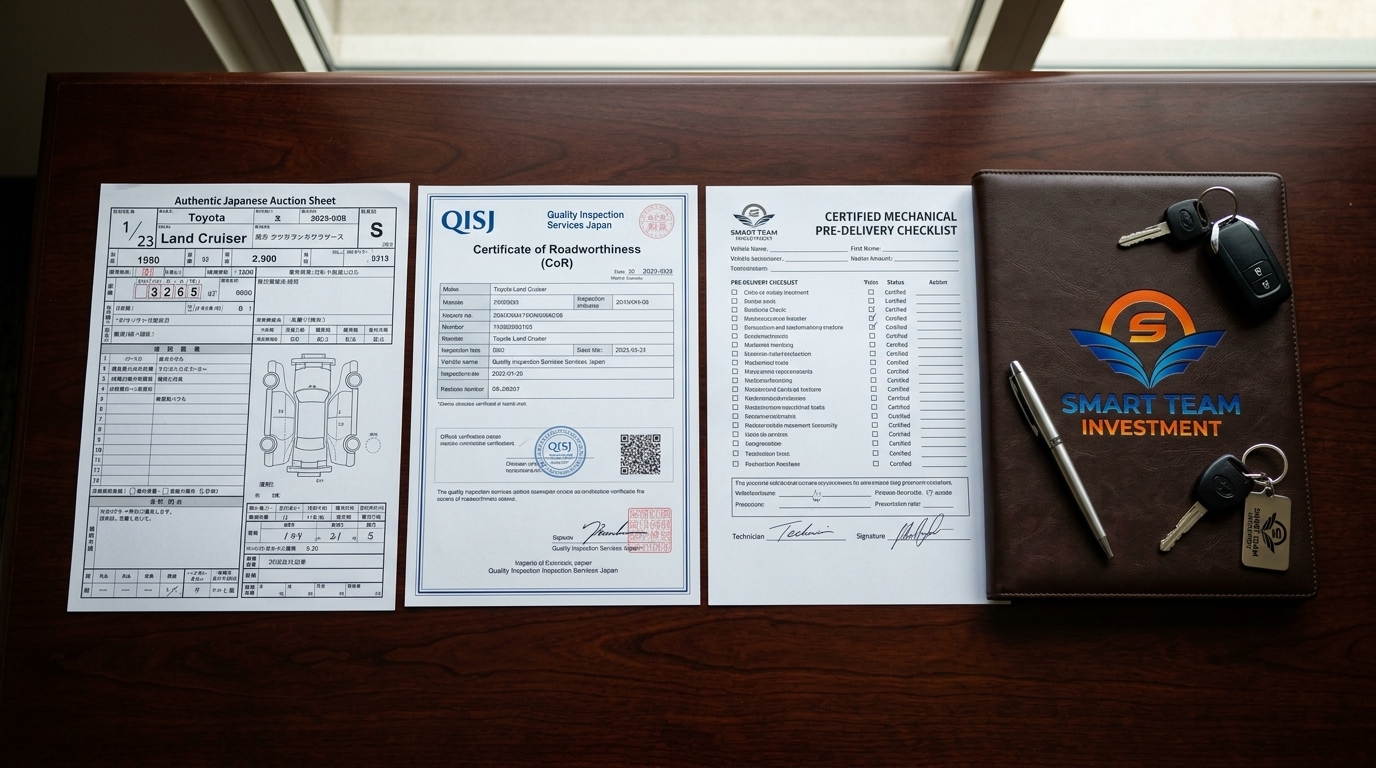
Kenya's 8-Year Age Limit at a Glance
Before we dive into the details, here is the compliance landscape every importer needs to memorize in 2026.
### The 8-Year Age Limit Rule — Snapshot
| Control Point | What Applies | Why It Matters For You |
|---|---|---|
| Age cap | Used imports max 8 years old from year of first registration | The 8-year subtraction gives 2018 — but KEBS clears 2019 and newer only for a 2026 import |
| Calendar basis | Counted by calendar year, not month-by-month | A Dec 2018 car and a Jan 2018 car are treated equally — but neither clears the 2026 KEBS gate |
| Authority | NTSA & KRA enforce at customs entry & registration | Non-compliant units are rejected, not "fined" |
| Compliance anchor | First registration date on the chassis decode / auction sheet | This is what brokers blur when they say "2016 is fine" |
| Inspection link | QISJ / JEVIC pre-shipment roadworthiness certificate | The cert records the vehicle's registration & inspection data |
| Exemptions | Government, diplomats, NGOs, and forced-resale cases (rare) | They do NOT apply to ordinary private imports |
> 💡 Related Reading: Before you bid on any year-model abroad, understand how the import inspection and duty stack changes across vehicle classes — see Demystifying QISJ & JEVIC Import Inspections and How Custom Duty Is Calculated for Car Imports.
Understanding the 8-Year Limit Rule
Kenya's KS 1515:2000 is the national standard that governs imported second-hand vehicles, enforced through Legal Notice No. 78 of 28 April 2020. The rule that matters for you is simple but brutally enforced:
> Only vehicles whose year of first registration is no more than 8 years before the year of importation can be cleared as used imports.
Run that subtraction for 2026 and you get 2018 or newer. Here is the part most buying guides get wrong: the rule says less than 8 years, not 8 or fewer, so a 2018 unit is exactly 8 years old in 2026 and fails. From 1 January 2026 only right-hand-drive vehicles first registered from 1 January 2019 and later may be allowed into the country. Units registered in 2018 or earlier were grandfathered only if they reached a Kenyan port on or before 31 December 2025 with a valid Certificate of Roadworthiness; anything landing after that is deemed non-compliant and rejected at the importer's expense. So for a 2026 import the qualifying pool is 2019 and newer. Confirm the current position with KEBS before you bid, because this notice is the operative gate and it can be tightened again.
What counts as "year of first registration"? KRA and NTSA use the initial domestic registration date of the vehicle in its country of origin — the date that appears on the Japanese export certificate, the chassis decode, and the auction sheet's registration block. The operative word is registration, not manufacture and not model year.
Why this distinction destroys "model year" arguments: A 10th-generation Corolla might carry a 2017 model-year badge yet be first registered in October 2018. Under the eight-year subtraction that vehicle is a 2018 unit and looks compliant — which is exactly the trap, because KEBS will not admit it in 2026. Meanwhile, a vehicle first registered in December 2017 but shipped as a "2018 model" fails on both counts, because its first-registration year is 2017.
Always request the exact first-registration year (and where possible the month) from the auction house or exporter — never rely on the model designation a broker prints on his listing.
How the Registration Year Is Calculated
This is the section most importers misread — and where the "bargains" hide.
### The Formula
`Compliant Registration Year = Year of Importation − 8`
> ⚠️ The subtraction is necessary but no longer sufficient. For a 2026 entry it returns 2018 — yet KEBS admits only 2019-and-newer units. Read the subtraction as the *statutory ceiling* from KS 1515:2000, then apply the KEBS notice for the *operative floor*. Where the two disagree, KEBS wins, because KEBS is the body that refuses your car at the port.
| Year of Import | Oldest Eligible Registration Year (8-year math) | Example |
|---|---|---|
| 2026 | 2018 on the 8-year math, 2019 under KEBS | A Toyota Axio first registered in May 2018 — inside the 8-year cap, but refused in 2026 |
| 2027 | 2019 | A Mazda Demio first registered in Jan 2019 — KEBS has published the 2019 floor for 2026 entries, so confirm the 2027 position before you ship |
| 2028 | 2020 | A Nissan Note first registered in Dec 2020 |
### Three Mistakes That Change the Answer
1. Counting model year, not registration year. A broker lists a "2018 Toyota Vitz" but the chassis decode returns a first-registration year of 2017. That car fails for a 2026 import. The auction sheet's registration block is the truth.
2. Counting the "made in" sticker. A 2018-built unit first registered in 2019 is still a 2019 registration — good news for you, and it is actually MORE compliant than a 2018-registered car.
3. Using the shipping year, not the import year. If you buy the car in late 2026 but it clears customs in January 2027, the applicable window shifts to 2027. Under KEBS's running notice the floor moves up with the import year — a unit first registered in 2019 is the 2026 floor and remains eligible in 2027, while a 2018 unit cleared in 2027 is well over-age. Time your shipping so your unit's clearance year matches your planned import year.
> ⚠️ The December 31 Trap: KEBS's notice turned this into a hard, dated deadline. 2018-and-earlier units could still land on or before 31 December 2025 with a valid Certificate of Roadworthiness — after that they are deemed non-compliant and rejected at the importer's expense. The same logic governs anything you buy now: the rule counts the import year, not the day the entry is filed. Confirm delivery timing with your clearing agent BEFORE you commit.
Critical Cutoff Dates and Shipping Windows
Getting the math right is only half the battle. You also must land in the correct import year window, which is where the December cutoffs cause the most pain.
### The 2026 Shipping Window in Practice
| Stage | Typical Duration | Latest OK for a 2026 Clearance |
|---|---|---|
| Auction purchase in Japan | 1–3 working days | Mid-October 2026 |
| Export documentation & shipping booking | 5–7 working days | Before mid-October 2026 |
| Sea transit Japan → Mombasa | 28–35 days | Vessel must arrive by end of November |
| Discharge + customs entry + clearance | 5–7 working days | Completed no later than end-December 2026 |
| NTSA registration & logbook issuance | 3–7 working days | After customs release |
The 2 safest windows: If your unit is a 2018 first-registration, aim to clear customs no later than early December 2026. If you cannot guarantee that, prefer a 2019 first-registration unit that can safely clear into early 2027.
> 💡 Related Reading: Timing your shipment correctly saves you weeks of port storage — see Clearing Cars at Mombasa Port: Step by Step and What Happens to a Car After 100,000 km in Kenya? (2026).
Consequences of Violating the Age Limit
Understanding exactly what happens when a unit breaches the 8-year rule is what separates informed importers from the people who lose entire budgets at the port.
### What KRA Actually Does With an Over-Age Unit
| Scenario | Outcome at Mombasa |
|---|---|
| Customs entry declares an over-age unit | Entry is rejected; vehicle stays in bonded CFS |
| Broker insists "it will pass on appeal" | Appeals go through customs HQ — historically slow, rarely overturned |
| Unit remains in CFS past the free window | Storage accrues per day — ask your agent for the CFS's written tariff |
| Importer gives up or cannot pay | Vehicle sold/auctioned to recover charges, or re-exported at your cost |
### The Financial Reality
* Freight + import duty already paid for the unit — stranded. * Port storage, billed per day once the free window expires, at your CFS's tariff. * Re-export at your cost if you want the car back — often more expensive than the car itself. * Total potential loss: KSh 600,000 to KSh 1,200,000 on a "bargain" unit, with no car delivered.
> ⚠️ The single cheapest protection: confirm the first-registration year from the chassis decode before you pay the auction deposit. Sixty seconds of verification saves an entire import budget.
Interactive Tool: QISJ Certificate & 8-Year Age Rule Compliance Checker
Before you wire a single shilling to an auction or exporter, run the same QISJ & 8-year age-rule compliance check our import team runs for clients — answer each question honestly and the tool returns your actual compliance posture, plus the path to a clean Mombasa clearance.
QISJ Certificate & 8-Year Age Rule Compliance Checker
Check Kenya import eligibility (2026) before you wire funds
Legal Age Status
PASSED (2019 ≥ 2019)
7 years old in 2026
Manufacture Gap
PASSED (1mo ≤12)
0.1 years gap
Required Agency
Quality Inspection Services Japan (QISJ)
Required Document
Official Certificate of Roadworthiness (CoR)
Port Clearance Risk
LOW RISK
QISJ tests KS 1515 roadworthiness + radiation + AIRIS odometer. A passed CoR is legal entry, not mechanical perfection — still do 5-point mechanical check on arrival.
The purpose of this checker is not to guess "whether you'll get lucky at the port." It is to force the exact first-registration-year and inspection questions into the open — where a mismatch is still cheaply fixable — instead of discovering them after your container is already at the CFS gate.
Actionable Recommendations for Buyers
Here is the exact pre-bid checklist our team uses before recommending any import:
* [ ] Confirm the first-registration YEAR from the chassis decode — not the model year, not the listing text. * [ ] Verify the import year window — trade 2018 units only if they can clear by end of 2026; prefer 2019+ for flexibility into 2027. * [ ] Request the QISJ / JEVIC roadworthiness certificate for the specific chassis — view it on the verification portal, not as a forwarded PDF. * [ ] Check the auction sheet registration block — the year must match the decode, and the reading should be legible, not edited. * [ ] Lock a written clearance timeline with your clearing agent before purchase so you never drift past the December cutoff. * [ ] Keep a 5–10% contingency of the landed budget for port storage or documentation surprises.
> 💡 Related Reading: Protecting the sale itself is just as vital as the age math — see How to Avoid Logbook Scams in Kenya and How to Buy a Car from a Kenyan Broker Without Getting Scammed.
Frequently Asked Questions (Kenya's 8-Year Age Limit)
No for the standard route. Kenya applies an 8-year age limit on all second-hand vehicle imports, calculated from the year of first registration to the year of importation (KS 1515). A 2018-registered car is the newest you can import in 2026; anything older cannot be cleared through KRA Mombasa unless it qualifies under the narrow NGO/diplomat/special-project exemptions — which is why checking the first-registration year on the auction sheet before shipping is the single cheapest step in the whole process.
NTSA and KRA calculate it as Year of Importation minus Year of First Registration (the launch year printed on the vehicle's details, not the plates or your purchase year). For 2026 imports the cutoff is registration year 2018 or newer. Note the calculation is calendar-based: a car first registered in December 2018 and one registered in January 2018 count the same way, so a seller quoting "7.5 years" is doing arithmetic NTSA does not use.
KRA will refuse the customs entry declaration and the unit stays bonded inside the Mombasa container freight station, accruing storage from day one. The options are re-export, complete write-off/scrapping under customs supervision, or — for very few cases — an appeal that still requires the vehicle to meet all current age rules. Every one of these paths converts your "bargain" into a five-figure loss of duties, freight and storage with no car delivered.
Year of first registration — the compliance anchor is the registration/model year on the manufacturer stamped plate, the Japanese auction sheet, and the chassis number decode, not the production sticker or the day the vehicle first drove. A car manufactured in 2017 but first registered in mid-2018 is still a 2018 for Kenya's age rule, which is why decoding the exact first-registration date is central to a compliant import.
Yes, and you should. Run the full chassis number (not just the model code) through a Japanese auction archive or submit it to an accredited import inspection team. The first-registration year is logged on the auction sheet and mirrored in the chassis decode — that 60-second check protects you from shipping a unit that KRA will reject at the gate.
Always confirm the current requirements on the official NTSA portal before you pay anyone, and keep the payment receipt.
The Godfather Offer: Free Pre-Shipment Age & Compliance Audit
Before you wire a deposit on any Japanese auction unit, make sure the year math is on your side — the first-registration year from the chassis decode, the import-year window your vessel will actually hit, and the QISJ/JEVIC inspection schedule.
We are offering a 100% Free 1-on-1 Pre-Shipment Car Age Compliance Audit via WhatsApp:
1. Age Rule Spot-Check: We decode the chassis and confirm whether your target unit is compliant for the year it will clear. 2. Shipping Window Alignment: We verify your unit can physically clear within its compliant year — no December surprise. 3. Inspection Readiness: We confirm the QISJ/JEVIC roadworthiness certificate matches the exact chassis number.
📱 How to Claim Your Free Audit: Send "AGE CHECK" with the model, year of first registration, or auction sheet screenshot to +254 790 406903 on WhatsApp.
*Message Format: "Habari! Requesting an 8-Year Age Limit Check for [Model / Chassis Number]".*
*Also review our related import guides: Demystifying QISJ & JEVIC Import Inspections and How Custom Duty Is Calculated for Car Imports.*
P.S. (TL;DR)
Here is the complete summary before you press "place bid" on that 2016 or 2017 "bargain":
- The rule: the 8-year cap would allow 2018-and-newer, but KEBS's notice effective 1 January 2026 means a 2026 import must be 2019 or newer in practice.
- Count registration year, not model year: the chassis decode and auction sheet registration block are the truth — the badge on the boot is not.
- Beware the December trap: a car that is compliant in 2026 can become over-age if it clears in 2027. Match the import-year window to the unit's registration year.
- Non-compliance = storage + possible re-export: KRA rejects over-age units at the entry, and every waiting day adds another day of storage at the CFS's tariff.
- Verify before you wire: 60 seconds on the decode, the QISJ certificate, and a written clearance timeline beats 6 months of port agony.
WhatsApp "AGE CHECK" with the model, year of first registration, or chassis number to +254 790 406903 for a Free 1-on-1 Age & Compliance Audit — registration-year spot-check, shipping-window alignment, and inspection readiness — before a single shilling moves.
--- *Disclaimer: This guide is for educational purposes and does not constitute formal legal, taxation, or financial advice. KS 1515 enforcement, KRA customs procedures, and published year caps reflect 2026 Kenyan market conditions and may be revised by the Kenya Bureau of Standards, NTSA, or KRA. Always confirm the first-registration year from official inspection and customs authorities before purchase. The 2019 floor for 2026 imports follows from the 8-year rule being less than 8 years, not 8 or fewer — verify it is still the operative position before you commit to a purchase.*
The 8-Year Age Limit Compliance Checklist
Everything that decides whether your import clears the KEBS and KRA gates — and the one date that ends the argument.
What you will discover inside
- ✓How the 8-year rule is actually calculated: less than 8 years from first registration, and why that excludes the boundary year
- ✓The QISJ inspection age slots and what happens if your car lands in the wrong year
- ✓Documents the KEBS and KRA gates demand, in the order they are asked for
- ✓The specific wording that gets an import rejected, and how to pre-empt it
- ✓A ready-to-use document checklist to take to your clearing agent
Free Download: The 8-Year Age Limit Compliance Checklist
100% free. Delivered instantly to your email and WhatsApp.