
The Cold Reality of Stolen Car Syndicates in Kenya
Car theft syndicates operate highly sophisticated cloning operations across Nairobi, Mombasa, Nakuru, and Eldoret. Stolen vehicles are altered within 48 hours to deceive unwary buyers.
Innocent buyers who pay millions in cash often discover months later that they possess a stolen car when police officers intercept them at checkpoints or petrol stations.
3 Forensic Tactics Used by Vehicle Crime Syndicates
| Criminal Tactic | How Criminals Alter Vehicles | Detection & Forensic Check |
|---|---|---|
| 1. Chassis Re-stamping | Grind off original firewall chassis numbers and weld in fake numbers matching a clean car. | Check firewall for welding seams, uneven font alignment, or fresh paint. |
| 2. Number Plate Cloning | Place duplicate plates from a legally registered car onto a stolen car of same color/model. | Verify engine CC, chassis number & owner details on eCitizen portal. |
| 3. Duplicate Logbook Scams | Create counterfeit physical logbooks or corrupt digital ownership records. | Run eCitizen MPSR Collateral Registry Search for lender caveats. |
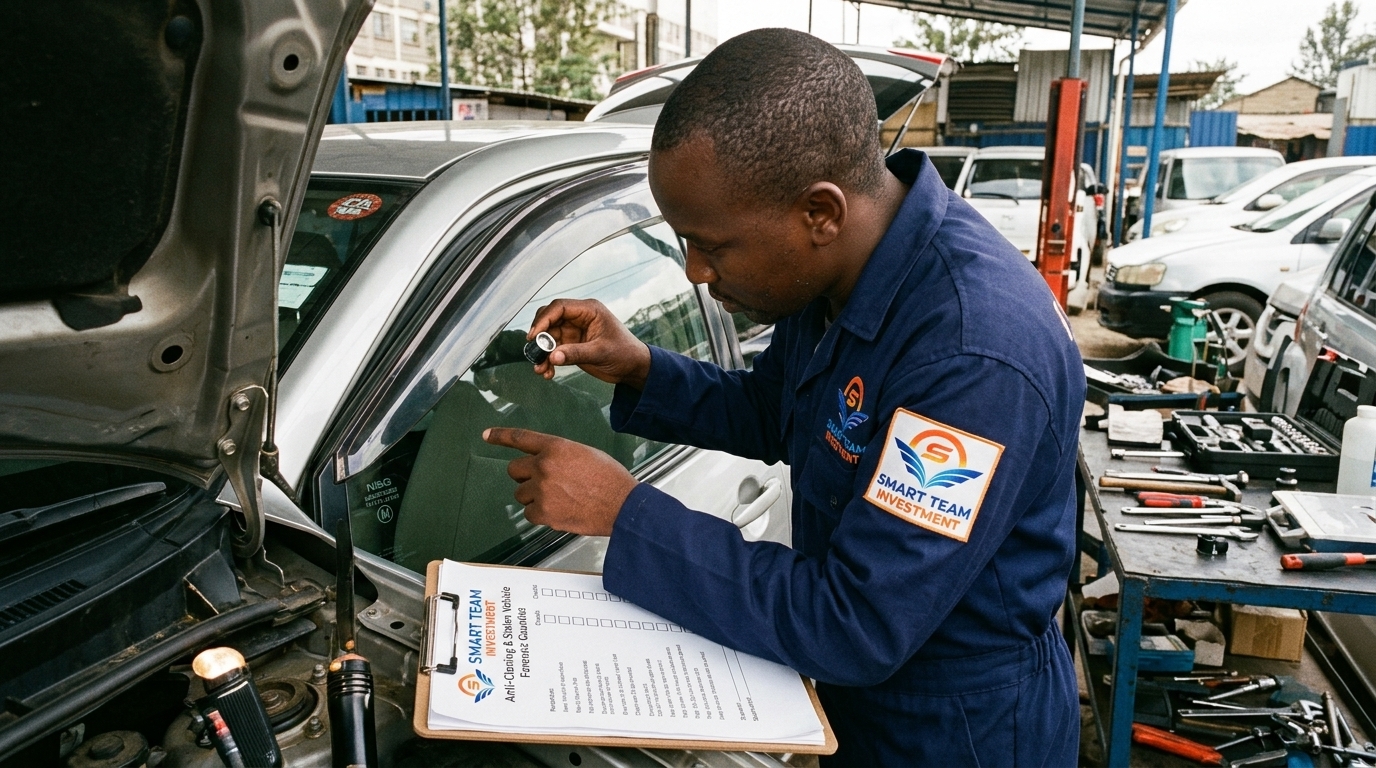
The 3-Step Forensic Inspection Gauntlet
Step 1: Inspect Physical Chassis Stamps (Firewall Metal) Never rely on the plastic dashboard VIN tag or riveted metal door plate. Locate the chassis number deeply stamped directly into the firewall metal in the engine bay. Feel for rough grinding marks, filler bondo, or fresh black spray paint around the numbers.
Step 2: Conduct Window Glass & Seatbelt Date Code Matching Every original factory glass window features a Toyota/Mazda logo and a small dot date stamp. If 5 windows carry 2016 factory codes and 1 window says "Carglass 2021", inspect that door frame for collision or re-bodying. Check the fabric tags at the base of the seatbelts for manufacturing year stamps.
Step 3: Demand a DCI Tape-Lift Clearance Report For private treaty sales or informal transactions, insist on a DCI (Directorate of Criminal Investigations) Anti-Car Theft Unit Tape-Lift Report. Officers place specialized chemical adhesive tape over the chassis stamp to verify original factory grain structure.

Interactive Tool: Used-Car Risk & Verification Calculator
Used-Car Risk & Verification Calculator
Estimate your mechanical & financial risk before paying a deposit (2026 Kenyan import market)
Estimated Unexpected Repair Outflow
KSh 770,000
Risk Score
96/100
EXTREME RISK — DO NOT PAY A DEPOSIT
Estimated unexpected repair outflow of ~KSh 770,000. No Japanese service records AND no underbody hoist inspection on a maintenance-sensitive import equals a "buy and fix" money pit. Get an independent pre-purchase verification scan before you pay a shilling.
This is an educational estimate of typical Kenyan workshop outflows for these models (Jatco CVT rebuilds, i-DCD dual-clutch repairs, e-POWER / hybrid battery packs, SkyActiv-D injectors, and underbody corrosion). "Think twice" never means "never" — verify the auction sheet, run the 5-step gauntlet, and get our free pre-purchase audit before you wire funds.
Claim Your Free Stolen & Cloned Vehicle Forensic Detection Cheat Sheet
Do not visit a yard, book a test drive or send an M-Pesa deposit until this is on your phone.
The Stolen & Cloned Vehicle Forensic Detection Cheat Sheet
The one-page field reference for Used Car Buyers, Private Treaty Shoppers & Second-Hand Buyers — price bands, deposit maths and the checks to run before you pay.
What you will discover inside
- ✓Chassis Stamp Forensics: How to inspect the firewall engine bay stamp for grind marks, fresh paint, or re-stamped numbers
- ✓DCI Tape-Lift & Crime Check Protocol: Step-by-step guide to verifying vehicle registration with the Directorate of Criminal Investigations
- ✓The Clone Plate Exposer: How criminal rings duplicate valid logbooks onto stolen cars—and the 3 physical signs that expose them
- ✓Window Glass & Seatbelt Date Code Matching: How checking glass manufacturing dates catches re-bodied stolen vehicles
- ✓The 100% Legal Ownership Guarantee: What documentation you must insist on in the Sale Agreement to protect your money
- ✓Chassis Firewall Stamp Inspection Protocol (Spot Re-stamped Frames)
Free Download: The Stolen & Cloned Vehicle Forensic Detection Cheat Sheet
100% free. Delivered instantly to your email and WhatsApp.
Frequently Asked Questions
Police will impound the vehicle immediately and return it to the rightful owner or insurance company. Private sale contracts offer no protection against police repossession.
A Tape-Lift is an official forensic inspection performed by DCI Anti-Car Theft officers. They apply chemical tape to the chassis stamp to verify original factory metal grain and rule out re-stamping.
The primary chassis number is stamped into the top metal firewall behind the engine bay. Secondary tags appear on the driver door pillar and dashboard.
Always confirm the current requirements on the official NTSA portal before you pay anyone, and keep the payment receipt.
The Bottom Line & Disclaimer
Claim your free STOLEN CAR CHECK audit on WhatsApp — a 60-second check can save you KSh 150,000+ in overpricing, hidden faults or an unpaid logbook loan.
*Disclaimer: This guide is for educational purposes and does not constitute formal legal, taxation or financial advice. Prices, EPRA fuel rates and bank terms reflect 2026 Kenyan market conditions and may change. Always confirm the chassis number, logbook status and an independent mechanical inspection before purchase.*